Colour Identification III — Understanding Road Colours and Signs – Primary 1 Basic Science Lesson Note

Topic: Colour Identification III
Subtopic: Road Markings and Traffic Signs
Date: ___________________
Period: ___________________
Duration: 40 minutes
Learning Objectives:
By the end of the lesson, pupils should be able to:
- Identify different colours used in road markings and traffic signs.
- State the functions of traffic signs and road markings.
- Explain the meaning of common road signs.
- Draw and label simple road markings and traffic signs.
Key Vocabulary:
Road, Traffic, Marking, Sign, Colour, Red, Yellow, White, Zebra crossing, Stop
Instructional Materials:
- Chart showing common road signs (STOP, pedestrian crossing, speed limit, etc.)
- Pictures or flashcards of roads with markings
- Whiteboard or manila paper for drawing activities
- Crayons or colour pencils (red, yellow, white, black)
- Toy cars (optional for demonstration)
Introductory Activity:
Teacher draws a simple road with lines on the board and asks:
🚗 “Have you seen lines or signs like these on the road before?”
Pupils respond with examples (e.g., “Yes, I saw it when crossing the road”).
Teacher explains that road markings and signs help people and cars to move safely.
Content of the Lesson:
Meaning of Road Markings:
Road markings are coloured lines and symbols painted on the road to guide drivers and pedestrians.
They help to show where people should walk or where vehicles should stop.
Common Colours Used in Road Markings and Their Meanings:
Colour | Meaning / Use |
White | Used to show lanes and zebra crossings (where people walk). |
Yellow | Used to show road edges or no-parking areas. |
Red | Used for stop signs or danger warning. |
Black | Used with white to make road lines clearer. |
Teacher displays a colour chart showing examples of each.
Meaning of Common Traffic Signs:
Sign | Colour | Meaning |
STOP | Red | Drivers and pedestrians must stop. |
PEDESTRIAN CROSSING (Zebra crossing) | White and Black | Place for people to cross the road. |
NO PARKING | Yellow and Red | Vehicles should not park there. |
SPEED LIMIT | White and Red | Drivers should not go too fast. |
Importance of Road Markings and Traffic Signs:
- They help prevent road accidents.
- They guide drivers and pedestrians.
- They help people obey traffic rules.
- They make roads safe and organized.
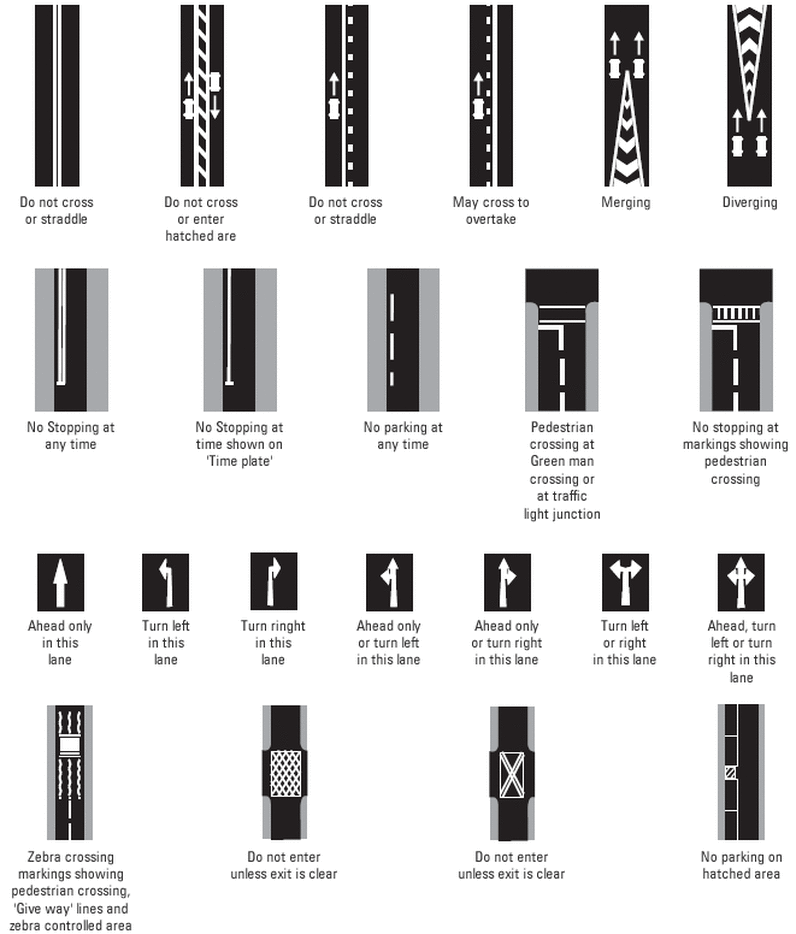
Drawing and Labelling Activity:
🖍️ Pupils draw three road signs in their books:
- STOP sign (red circle with the word “STOP”)
- Pedestrian crossing (black and white stripes)
- No parking sign (red circle with a slash)
Then they colour each using the correct colours.
Teacher walks around to guide and correct them.
Board Summary:
- Road markings and traffic signs help people and vehicles move safely.
- Common colours used are white, yellow, red, and black.
- “STOP” means stop moving.
- “Zebra crossing” is for people to cross the road.
- Obeying traffic signs helps us stay safe.
Class Exercise 1:
Fill in the blanks:
- Road markings are painted on the ________.
- The colour ________ means stop.
- Black and white lines are called ________ crossing.
- The sign “NO PARKING” means cars should not ________.
- Traffic signs help to prevent ________.
Class Exercise 2:
Match the road sign to its meaning:
Road Sign | Meaning |
STOP | Stop moving |
Zebra Crossing | People can cross here |
No Parking | Vehicles must not park |
Speed Limit | Do not drive too fast |
Assignment (5 MCQs):
- Road markings are found on the ________. (a) Sky (b) Road (c) Wall)
- The red colour means ________. (a) Go (b) Wait (c) Stop)
- The zebra crossing is used for ________. (a) Playing (b) Crossing (c) Sleeping)
- White lines on the road show ________. (a) Houses (b) Lanes (c) Clouds)
- Traffic signs help to make the road ________. (a) Safe (b) Dirty (c) Busy)